About
Why TaskJunky exists
A task management system born from watching AI tools forget everything between sessions.
-01_Sidebar.png)
The problem
We were tired of task management being a manual chore. Every AI tool we used could write code, answer questions, plan architectures — but it couldn't remember what it was working on across sessions. There was no persistent memory of tasks, no way to track what got done.
We'd start a coding session with Claude, and it would do incredible work. Plan features, implement them, write tests. But the next day? Clean slate. No record of what was accomplished, what was left to do, or what decisions were made along the way.
We tried using traditional task managers — Todoist, Linear, Notion. But they're all designed for humans to manually create and check off tasks. Connecting an AI agent to them was an afterthought at best, impossible at worst. The interface was wrong. The data model was wrong. The entire paradigm was wrong.
What I built
We built TaskJunky because AI agents need a task system designed for them, not adapted from human workflows.
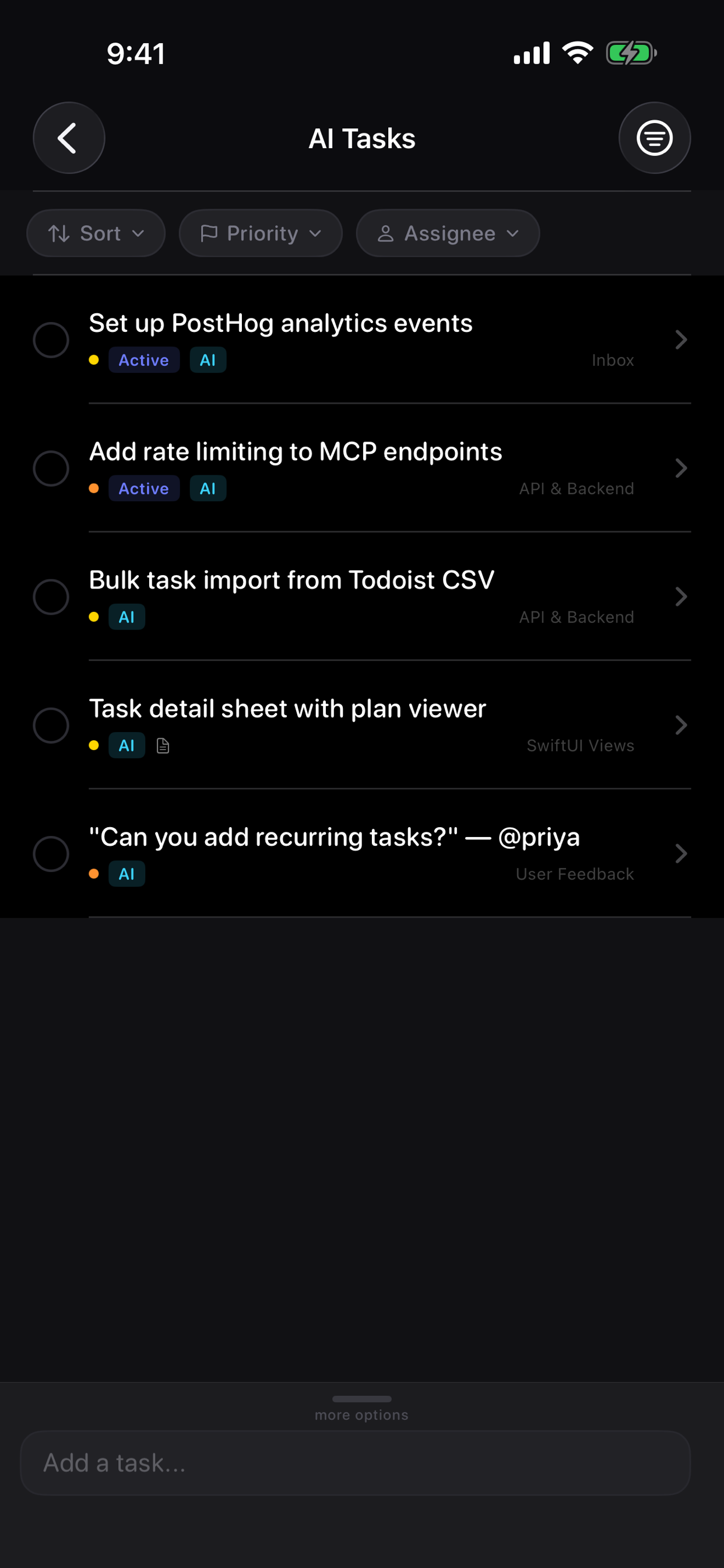
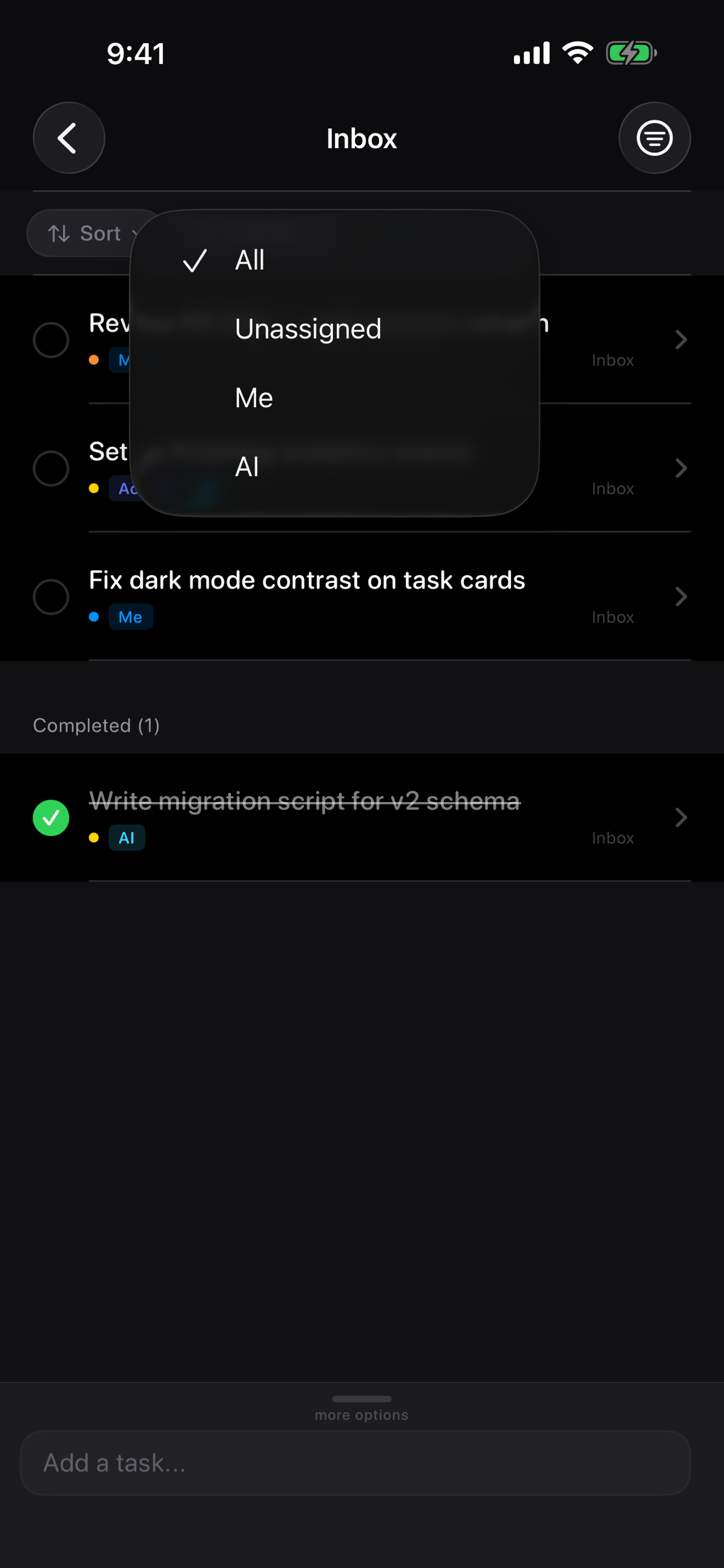
TaskJunky gives your AI agent 23 tools to manage its own work — create projects, break down features into tasks, write implementation plans, log what it did, and mark things done. It follows rules you set, remembers context across sessions, and reports everything to a dashboard you can check whenever you want.
The agent is the primary operator. You're the observer and the decision-maker. You set the direction, define the rules, and adjust priorities. The AI does the execution. That's the model TaskJunky is built around.
It works with any AI tool that supports MCP — Claude Code, OpenAI Codex, GitHub Copilot, Google Gemini. One config line and your agent has a full task management system at its disposal.
-04_AllTasks.png)
Where it's going
AI agents are going to be first-class participants in every workflow. Not just code completion or chat assistants — full autonomous agents that plan, execute, and deliver real work over hours and days.
When that happens, those agents will need infrastructure designed for them. Task systems they can read and write to. Activity logs they can reference. Rules they can follow. Dashboards their human operators can use to observe and steer.
That's what TaskJunky is building toward. Not another task app with an AI feature bolted on — but the management layer that makes autonomous AI work actually work.
Behind the name
The name plays on obsession — but the quiet, productive kind. A task junky is someone who can't stop working through lists, checking things off, watching progress move. In TaskJunky's case, the junky isn't you. It's the AI. Your agent is the one with the obsession. You have the control.
Junky— the mascot — is the embodiment of that idea. A small tin can robot, always working, always checking off the next thing. The phantom in the machine. An autonomous presence that shows up in your activity feed, leaves notes on tasks, and logs what it shipped while you were away. Not hidden. Just quietly relentless.
It's the same thread that runs through everything we build. Something unseen does the heavy lifting while you develop the skill, the judgment, the direction. The phantom traces. The junky completes. You steer.
The Company
Kindling Signal
Building tools for the AI-native workflow
Kindling Signal builds software at the intersection of AI agents and human productivity. We believe the next generation of tools won't just assist humans — they'll coordinate AI agents as first-class operators while keeping humans in control.
TaskJunky is our flagship product: a task management system designed from the ground up for AI agents. We also build Phantrace, a creative drawing companion for iPad, and other tools that make complex workflows feel effortless.
We use our own products every day. If something's broken or missing, we feel it immediately and ship the fix the same day. That's the advantage of building for yourself first.